
Installing internal doors, fire doors and doorsets is a skilled job that demands accuracy and attention to detail. Whether trimming a door, machining a frame, fitting hardware or making final adjustments on site, joiners and carpenters can be exposed to a range of hazards throughout the installation process.
Choosing the right personal protective equipment (PPE) and respiratory protective equipment (RPE) helps reduce risk and supports safer working practices. While PPE and RPE should never replace effective dust control measures and safe working methods, they remain an important part of protecting installers throughout the working day.
Eye protection: A simple but essential safeguard
Door installation often involves cutting, routing, drilling and sanding timber and wood-based products. These tasks can generate flying chips, dust and debris that can easily cause eye injuries.
Suitable safety glasses or goggles should be worn whenever there is a risk of particles becoming airborne. Eye protection should fit comfortably, provide good visibility and meet the relevant safety standards for the task being carried out. Even relatively quick jobs, such as trimming a door edge or routing for hinges and seals, can produce enough debris to cause injury if suitable eye protection is not used.
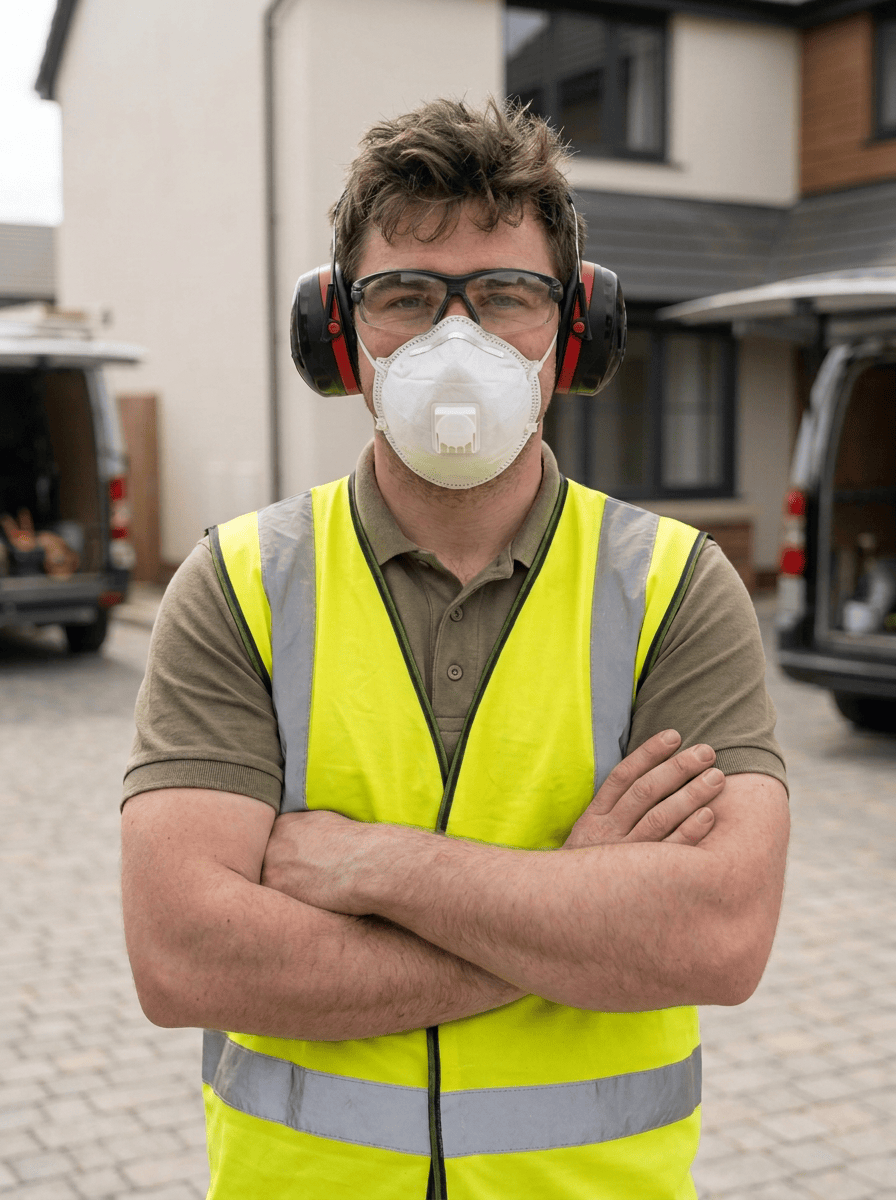
When selecting eye protection, installers should look for products certified to EN ISO 16321 (which has replaced EN 166 as the principal eye protection standard).
Hearing protection matters too
Power tools commonly used during door installation, including routers, circular saws, mitre saws and drills, can generate significant noise levels.
Repeated exposure to excessive noise can lead to permanent hearing damage over time. Wearing appropriate hearing protection, such as ear defenders or ear plugs, helps reduce this risk and supports long-term hearing health.
The level of protection required will depend on the tools being used and the duration of exposure, but hearing protection should always be considered when carrying out noisy operations.
Hearing protection should be selected in accordance with the Control of Noise at Work Regulations 2005.
Understanding the risk of wood dust
Many door installation activities generate wood dust, particularly when cutting, sanding, routing or machining timber and engineered wood products.
According to the Health and Safety Executive (HSE), wood dust can cause serious health issues, including asthma, respiratory irritation and, in some cases, cancer linked to hardwood dust exposure. Carpenters and joiners are significantly more likely to develop occupational asthma than many other workers.
Dust control should always begin at source through good housekeeping, suitable tools and effective extraction where possible. However, there may be situations where respiratory protection is also required.
Choosing the right respiratory protection
Where there is a risk of exposure to wood dust, installers should wear RPE that is suitable for the task and the level of exposure.
It is important to remember that not all masks offer the same level of protection. The selected RPE should be appropriate for wood dust applications and worn correctly in accordance with the manufacturer’s instructions.
A high-specification mask provides little benefit if it does not fit the wearer properly. A poor seal allows contaminated air to bypass the filter and be inhaled.
Where RPE is required, masks should be selected and used in line with HSE guidance on Respiratory Protective Equipment (RPE) and the requirements of the Control of Substances Hazardous to Health (COSHH) Regulations 2002. For many woodworking applications, a FFP3 disposable respirator certified to EN 149 is commonly specified because it offers the highest level of filtration available within the FFP classification.
The challenge of facial hair on site
One of the most common issues affecting respiratory protection is facial hair.
Tight-fitting masks rely on a close seal between the mask and the wearer’s skin. Stubble, beards and other facial hair can create gaps around the sealing surface, reducing the effectiveness of the mask and allowing dust to enter. Studies have shown that even relatively short stubble can significantly reduce the level of protection achieved.
Installers who wear tight-fitting RPE should be clean-shaven where the mask seals against the face. Where this is not practical, alternative forms of RPE, such as powered respirators with loose-fitting hoods or visors, may be more suitable.
Safety starts before the first cut
The quality of a door installation depends on precision, but safe working practices should never be overlooked. By combining suitable eye protection, hearing protection and properly fitted respiratory protection, joiners and carpenters can help reduce workplace risks and protect their long-term health.
At Deanta, we recognise the expertise involved in professional door installation and encourage best practice on every project, from the first cut to final fit.
Further information and resources
For the latest guidance on PPE, RPE and controlling exposure to wood dust, the following resources may be useful:
Health and Safety Executive (HSE)
- Wood dust: risks, exposure limits and control measures
- HSE Wood Dust Guidance [hse.gov.uk]
- Respiratory protective equipment (RPE) guidance
- HSE Respiratory Protective Equipment
- Face-fit testing guidance
- HSE Face Fit Testing Guidance
British Safety Industry Federation (BSIF)
- Guidance on facial hair and respiratory protection
- RPE and Facial Hair Guidance for Employers [bsif.co.uk]
- RPE and Facial Hair Guidance for Wearers [bsif.co.uk]
Key Standards and Regulations
- EN ISO 16321 – Personal eye protection
- EN 149 – Filtering half masks for protection against particles (FFP1, FFP2 and FFP3)
- Control of Substances Hazardous to Health (COSHH) Regulations 2002
- Control of Noise at Work Regulations 2005
- Personal Protective Equipment at Work Regulations 1992
This article is intended as general guidance only. Appropriate PPE and RPE requirements should always be determined through site-specific risk assessments, manufacturer instructions and current Health and Safety Executive (HSE) guidance. Employers and installers remain responsible for ensuring suitable protective equipment is selected, correctly fitted and properly maintained.